

Full session replay
Watch the replay, free with a Firm profile
Enter your email and we will send a code. No password, and one profile unlocks every replay, deck and template on The Firm.
Checking your sign-in…
- Juniors now ask AI before the partner. Michael Jeffriess said the answer arrives in seconds, so what clients pay for is judgment, verification and accountability.
- Getting an answer isn’t understanding it. Maureen Gabriel said juniors may not yet spot a missing assumption or a fact that changes everything.
- The questions are the work. Maureen said a good adviser starts by asking what’s missing, and TaxGuru 2.0 is designed to surface those questions.
- Context decides the answer. Grant Abbott said that unless you give the full facts, you won’t get the right answer.
- The review stays human. Maureen said an AI response does not transfer professional responsibility to the system.
Grant Abbott, who has worked in tax law since 1985, introduced Michael Jeffriess, TaxGuru’s co-founder, who comes from an accounting firm background, and Maureen Gabriel, who has been designing the next version. They asked what a team learns when the junior stops asking the partner. Grant then demonstrated two questions in the current version, TaxGuru 1.7.
The gate is critical thinking
Michael said firms often don’t know which tools juniors use, and staff may be putting client data or firm IP into personal accounts of Claude, ChatGPT or Grok. Once juniors ask AI first, speed isn’t what the client is paying for. What matters is judgment, verification, accountability and creativity. Michael said he learned through research-based training that built critical thinking: find the answer, pull it together and send it up for review. A junior who gets an instant answer may not know whether it’s right, and skips that process.
He said PwC had announced it is investing $100 million in critical thinking and decision-making training for 85,000 staff. His case for using a specialist research engine the firm can trust, rather than a general chatbot, was that fixed-fee advice gets more profitable, firm knowledge stays when people leave, and one partner can supervise more work.
What the partner conversation taught
Maureen asked partners how much of what they know came from a textbook. Most of it, she said, came from a senior challenging them: who owns the assets, what happened before the transaction, have you considered trusts? That exchange teaches scepticism and judgment as well as technical knowledge. AI gives a persuasive answer with citations, and people feel confident enough to move on, but a junior may not have the experience to spot a missing assumption, a wrong interpretation, or a single fact that changes everything.
She was clear this isn’t an argument against AI. The question, she said, is whether AI can make the junior a better accountant as well as a faster one.
Designing for the unasked question
Maureen has spent about 13 months on the design of TaxGuru 2.0. Using the example of moving an asset from a company to a family trust, she said an experienced adviser asks more questions first: what assets, who owns them, why, at what value, when. The design aims to help practitioners see the unasked questions, connect consequences across companies, trusts and individuals, and see which facts change the answer. Juniors should arrive at the partner with the facts, an outline of the issues and specific points for review. Partners can then challenge the reasoning and teach judgment.
She said 2.0 is still being validated and tested, and the team won’t launch it until it’s measured against a proper baseline. She described the new model as designed to be “regulator-grade”, with audit trails of who asked what that only a partner can delete. Michael added that a user had asked for a way to tick off each reference as reviewed, to help meet TPB requirements, and that this is being built.
Worked example: car expenses under review
Grant showed a question from an accountant: an individual under ATO review for 2025–26, with four employers across two roles, a personally financed car, a 12-week logbook and a large D1 claim. The tool first asked follow-up questions, such as whether the employers were related and whether travel was direct between workplaces. It then worked through the law, pointing to section 25-100 on travel between workplaces and the relevant part of the long ruling MT 2027. It noted that ordinary home-to-work travel isn’t deductible, citing Lunney. Grant said he works in reverse, applying first and then reading the section to learn it, and that the output can become an audit workpaper.
Worked example: a Bali villa developer
The second question involved an Australian company whose Indonesian subsidiary builds villas to rent. After asking for more facts, the tool concluded it was a CFC, worked through section 340 and pulled the relevant paragraphs of a Commissioner’s ruling, with 34 references. Because development profit and rental income were mixed together and passive income is tainted, Grant said the company would virtually have to attribute. He then asked how to separate the development profit into another entity, and Grant said the tool asked more questions before setting out restructuring options. He produced a client infographic, a structure diagram and a draft letter of advice, and said the work could then go to a lawyer for review and sign-off.
Grant also mentioned running a strategy against the High Court’s recent decision in the Merchant case.
What’s next
Michael said monthly pricing will be released at the team’s conference in 12 days, with a deal for CPA Australia members. Maureen asked senior accountants to join a testing committee for 2.0.
Key moments
“Judgment is built by doing the work. Skip the reps, and the gate never gets built.” — Michael Jeffriess
“We end up confusing the ability to obtain an answer with the ability to understand and assess it, and those are two very different things.” — Maureen Gabriel
“there’s no such thing as a basic question in any tax matter, particularly when you’re getting audited.” — Grant Abbott
“If AI means your junior no longer needs to ask you as many questions, then who’s teaching them how to become you?” — Maureen Gabriel
- $100 million and 85,000 staff: the PwC training investment Michael cited.
- 34 references behind Grant’s CFC answer.
- 13 months Maureen has spent on the 2.0 design.
The full session, lightly edited for readability. Click a time to jump the replay to that moment.
Transcript powered by
-
Trent McLaren: We're talking tax research: when the junior stops asking the partner, what your team learns in 2027. I think this is the first dedicated tax research session, so I'm excited to have you guys here. Good to have Michael, Grant and Maureen. Grant, I'll hand over to you and let you run the show, but thank you for getting involved in the summit and hanging out with us today.
-
Grant Abbott: Okay, thanks for that, Trent. I've been very lucky to have been in the tax law area since 1985, and drifted into self-managed super. At Lightyear Docs we made a commitment to AI. We had the first ever AI for accountants training way back in February 2024, just a few months after the release of ChatGPT. And we've been very lucky in the last year and a bit, the three of us, particularly Michael and myself, and now the brilliant Maureen, to really take TaxGuru to the next level. And I'm going to end up demonstrating it. My background is obviously in tax law and, more importantly, training around it, and I want to show that with the way the system is, and the research that Maureen's put into this, honestly, it's pretty hard for a junior to mess up, unless they don't have all the information.
-
Grant Abbott: Because the very nature of it, as you'll see, is that TaxGuru pulls out relevant paragraphs from cases, relevant sections, relevant paragraphs from ATO rulings, through its corpus, so that when you're training, you're getting really laser-focused training. The full case is available, but it digests and extracts the right parts. So it's very exciting. When I do demos, and people give me questions, and I look at the answers, honestly, it blows me away. I'm going to show you a CFC question and a simple work-related expenses one. From one you'd think it'd be really easy, and the other would be impossible for even a junior to do, and we're going to show you through TaxGuru how it is. Of course, everything needs to be verified. Michael, do you want to have a quick word, and then Maureen, and then we'll get straight into your slides, big fella.
-
Michael Jeffriess: Yeah, definitely. Thanks, Grant. Thanks, Trent. It's an interesting topic, when the junior stops asking the partner. Jump in the chat: who's using a tax research tool, whether it's a niche one like ours, or a proprietary one? As I saw on a Facebook group, there's a lot of people using Claude, and we'll talk about some of the reasons why that may or may not be a good idea. From the junior's perspective, one of the things you've got to think about with AI, and I'm seeing it a lot across businesses, and I used to own an accounting firm myself, is that you don't necessarily know what tools the junior, or whoever in the office, is actually using. They might be using their own personal version of Claude, or ChatGPT, or Grok, and feeding proprietary information or IP of the firm, or client data, in there without your knowledge.
-
Michael Jeffriess: Maureen will talk about a lot of the guardrails and the risks a bit later. I'm going to give a bit of my perspective on the disruption that's happening. Jensen did say you're not going to lose your job to an AI, but you will lose your job to somebody who's using AI. It's such a powerful statement. You saw what happened at Canva in the last week. Qantas also got rid of some jobs, not necessarily from AI, there was a fair bit of offshoring there, but Canva was strongly driven by AI. So it's really important that you get in and learn tools, and use tools, by just playing around with them. That's how we started building our own agents. I own an accounting firm, I come from an accounting background, so I know your pain points. I also have a shareholding in a technology company, Lightyear Group, so we know how to build technology and we know tax and accounting. It's a great mix.
-
Michael Jeffriess: So, the junior used to ask the partner; now they ask AI first, and as I said, that can be any tool. They get the answer in seconds, so speed alone is no longer what the client's paying for. The big thing is judgment, verification, accountability, and I also believe creativity, which has always been a strong point of a lot of accountants. It's that critical decision-making that is really paramount. Grant, if you go to the next slide.
-
Grant Abbott: Hold on. I'm not a very good slide girl, but anyway, sorry about that.
-
Michael Jeffriess: Judge it and build with it. The gate: critical thinking. This is really important. It's all good and well having Claude, OpenAI, Grok, TaxGuru or our competitors, but you still need critical thinking, and this is what's going to be missing in the juniors and intermediates coming through. When I started in the industry, I'll show my age here, 30-plus years ago, I actually did Grant's original training at the Strategist Group. That training, and the research work, was all built around critical thinking. It was how uni was taught as well: how to go and find the answer, bring it together, and put something through to the manager or partner to review. Now you've got a tool where I can ask that question straight away, and at the junior level I may not know if it's right or wrong, and I'm not putting any of that critical thinking process together.
-
Michael Jeffriess: I'm also not putting creation behind it, and that's where the edge comes. Creation is going to be so important going forward. I do a bit of work with Simon Beard, who's talking at our upcoming conference in about 12 days on the Gold Coast, and he's built the Creation Army. It's all good and well having AI and these tools, but if you don't have the ability to critically think, and a creative thought process behind it, then it's very difficult to get the right answer, or an answer you can present to your clients. Judgment is built by doing the work. Skip the reps, and the gate never gets built. That's what we're seeing, and what we're going to continue to see coming through, and what TaxGuru solves as well.
-
Michael Jeffriess: Grant, next slide. PwC, I don't know if anyone saw it, announced in the last week or so that they're investing $100 million specifically in critical thinking and decision-making for 85,000 team members, all driven by AI. They're concerned about the lack of critical thinking and decision-making they're starting to see from their juniors and intermediate accountants. So the big four aren't just training people to use AI, they're training them to question it. Really important to think about that. So, the big ballsy move: don't buy a chatbot. I saw some people in the chat talking about using Claude. I use Claude daily, every minute. I use TaxGuru all the time. I use a whole heap of other tools as well, but it's really important to use engines that your firm can trust, whether it's TaxGuru or another tax research tool.
-
Michael Jeffriess: I'm talking about Anthropic, because I use Claude heavily, in Claude Code and everything. You're seeing a big change where the likes of Harvey for legal are bolting into them via MCPs, and Claude is using that niche engine to make its engine stronger. They'll start doing that with tax research tools as well, and there's a lot of interest out of the US in making a niche research tool part of their overall model. So fixed-fee advice gets more profitable; research doesn't. The firm's knowledge stops walking out the door, which is a great thing. Having owned a firm, I know how hard it was when that IP or knowledge walked out the door. And one partner can supervise a lot more work: a lot more work, a lot more dollars, better margins. So, lead it, or get led by it. Maureen?
-
Grant Abbott: Okay, off to Maureen, if you want to take it away. This is the superstar of the show.
-
Maureen Gabriel: Thanks. This topic really does excite me, because I've been in the space as a specialist in emerging tech for the last six to eight years, and one of my biggest personal concerns was seeing the level of cognitive decay and decline in people using AI. So my part of today is running you through what we did differently, and the new design of the next generation of TaxGuru, and why this topic nails it perfectly. Grant, if you want to click next. I want to start with a question for all the partners and senior accountants in the room. Just like Michael said, think back to when you were a junior accountant: how much of what you know today was learned from a textbook? Probably very little. You learned a lot of it by asking your manager or partner a question, being challenged on your assumptions, and discovering which issues were more complicated than you first thought.
-
Maureen Gabriel: For generations before AI, that exchange has been a big part of how accounting firms develop their expertise. When a junior brings a question to a senior, the senior doesn't always just give them the answer. They challenge it. They might ask: why do you think that? Who owns the assets? What happened before that transaction? Have you considered trusts? What's the evidence? That conversation teaches the technical knowledge, but it also teaches a level of skepticism, judgment, and understanding what the client's requirements are. Now imagine what we're seeing with juniors and AI. They type in the question, and within seconds they receive a very persuasive, well-written answer. It might come complete with citations, and that leads a lot of people, not just juniors, to feel confident enough in that answer to move on.
-
Maureen Gabriel: But the real risk, and we're seeing this quite often in law, before the courts, in finance and medical matters, is that when you are still developing your expertise, you may not yet have the experience to spot a missing assumption, an incorrect legal or accounting interpretation, or a single fact that could change everything. We end up confusing the ability to obtain an answer with the ability to understand and assess it, and those are two very different things. An AI response can be very useful, but it doesn't transfer professional responsibility to the system. This isn't an argument against using AI, because we should absolutely use it. It's an amazing tool. It helps practices move faster and deal with the pressure they're under. AI offers genuine productivity opportunities, but only if we measure success without missing what could cost you in the long run.
-
Maureen Gabriel: Grant, can you go back? The learning experience is what actually creates our future seniors and partners. So my question isn't whether AI can make juniors faster. The question should be whether we can make the junior a better accountant at the same time. And that's the problem TaxGuru 2.0 is solving.
-
Maureen Gabriel: What I want to talk about is what the next generation of TaxGuru is being built to do, because that challenge is one of the ideas shaping it. I've spent going on 13 months designing and developing the new principle. We're not interested in building just another place to type a tax question and receive a polished answer. There are already plenty of tools on the market that can give an answer. Our ambition for the soon-to-be-released TaxGuru 2.0 is a different professional experience: one that helps accountants recognise what matters before the advice is finalised. For example, a client might say, I want to transfer an asset from my company into a family trust. What are the tax implications? That's a very basic question.
-
Maureen Gabriel: It's tempting to treat that as a single research question. But an experienced adviser knows the valuable work begins by asking more questions. What assets? Who owns them? Why are they being transferred? At what value? When? What's the history of the company and the trust? Are there related transactions? They're always looking for what information is still missing. That's where our vision started. First, to help the professional see the unasked questions. Not every client tells you every fact that matters, and not every junior knows the facts they should be requesting. So we've designed TaxGuru 2.0 to support more disciplined issue recognition. It's taken us months on end.
-
Maureen Gabriel: Second, we've designed it to connect the consequences. Tax matters rarely sit in a neat little box. A transaction can involve companies, trusts, individuals and different obligations, so our aim is to help practitioners explore the relevant connections rather than inadvertently treating each question as isolated. And third, to understand what changes the answer. Dates matter. Ownership matters. Context matters. Sometimes a single fact changing can shift the entire analysis. So we want practitioners to see assumptions and unresolved issues more clearly, and have material they can inspect and challenge rather than simply accept. Think about what that means for a junior who works for you. Instead of an instant answer that ends the learning process, they have clearer routes into the actual problem: the issues, the questions, the consequences, and the areas where a senior needs to exercise judgment.
-
Maureen Gabriel: And for an experienced partner, that's a more useful starting point for scrutiny, review and high-value client conversations. We're not suggesting AI is going to replace professional judgment, but we're building something that goes beyond a faster answer. We want TaxGuru 2.0 to help you think through the problem, recognise what matters, and make better-informed decisions, while teaching your juniors why that's a good decision. Is this the next slide, Grant? Thanks. In practical terms, I see three opportunities for accounting firms, each affecting a different part of your practice.
-
Maureen Gabriel: For a junior, we want AI to become a tool for stronger thinking. A junior shouldn't be able to just submit a question and paste the result into a file. They should be encouraged to understand what the question means, what hasn't been established yet, what consequences need to be investigated, and where their own confidence should stop. That's a much more valuable learning outcome than just getting the answer faster. For a partner or manager, it's the opportunity to reclaim time for the work that matters most. We don't want to eliminate the senior-junior relationship; we want to make those conversations more valuable. Instead of beginning with an avoidable question, a junior can come to the partner with a better understanding of the facts, an outline of the issues, and the specific points that require their review.
-
Maureen Gabriel: Then the partner can focus on challenging the reasoning, applying commercial knowledge, understanding the client's objective, and teaching judgment. For the firm overall, this is the difference between automating output and building capability. Productivity matters, but so do consistency, the quality of work under review, your ability to train people, and the confidence to handle increasingly complex client circumstances. The prize shouldn't be just doing the same work faster. It needs to be a practice that can grow its expertise while adopting this technology. Although TaxGuru 2.0 is being designed to support professional analysis, we don't want it to replace the accountant's responsibility for that advice.
-
Maureen Gabriel: We're actively developing and testing the next generation of the platform, and we'll demonstrate its capabilities as they're validated, because the value of this vision will ultimately be measured by the quality, reliability and usefulness of the finished product, not by promises, which a lot of companies make. Imagine an accountant out from behind the computer, and someone asks them a question. If they haven't taken the time to learn their trade, it's going to be very obvious if they're always saying, give me a couple of minutes, I'm just going to type it into my computer. You lose that knowledge. What excites me about this point in time is that this is the moment where firms, and you as owners, can choose what you want AI to optimise.
-
Maureen Gabriel: Do you want systems that just deliver more answers, or systems that help people ask better questions, recognise broader consequences, and become stronger advisers themselves? I'll leave you with this. If AI means your junior no longer needs to ask you as many questions, then who's teaching them how to become you? That's one of the challenges we're building the next generation of TaxGuru AI to help solve. If you're interested, get a demo when it's done, because we're going to launch probably in the next couple of weeks.
-
Michael Jeffriess: Maureen, the interesting thing you were saying about people going, oh, I've got to go away, and then they use their AI tool and come back to you. We actually witnessed that, you and me, at an offshore location with an external lawyer. We were asking questions, and he was going to the AI to get back to us. And someone just commented about the negative impacts on brain activity.
-
Maureen Gabriel: And it's embarrassing.
-
Michael Jeffriess: It was like when Google first came out. I was going to trivia nights with my phone under the table, looking things up on Google. It's not that I didn't know the answer; I'd just got so used to using that tool that I stopped.
-
Maureen Gabriel: They've already proven that there's been a significant cognitive decline in people's ability, so we want to help stop that and take people back to a point where you can use this to benefit you, if you know how to use it right.
-
Grant Abbott: Yeah, so look, we're coming up to TaxGuru 2, but we've got TaxGuru 1.7, which in the last three months has really changed my life. I was very lucky, in my Master of Laws, to sit beside some of the doyens, and as Michael said, the concept is always: read, understand and apply the law. You don't know where to start reading unless someone teaches you. On the left-hand side of TaxGuru you can see some of the questions I've put in. Many of you may not know, but the Merchant case, with the Billabong shares, was released last week. I was able to put that High Court decision straight into TaxGuru. There were two aspects to it. One was the losses: selling the Billabong shares to create a capital loss he could offset against other capital gains.
-
Grant Abbott: The court knocked that back. But the interesting one is getting those Billabong shares, with franking credits in them, into a tax-effective vehicle such as a self-managed superannuation fund. They looked at 177F, the dividend stripping analysis. I won't go into the hardcore, but there's another strategy that is very popular, which is essentially taking bucket companies and transferring them into a self-managed superannuation fund, even though they are private companies. Given the change in the trust laws, it makes a lot of sense to do so. So I ran that up the flagpole against the High Court decision in Merchant, and it came out with a couple of thumbs up. I use it all the time.
-
Grant Abbott: From my perspective, there is nothing I can't answer with TaxGuru, or at least get a lead into finding where it is. If you'd like, make a booking and come to a discovery session with me, and bring your hardest tax questions. But bear in mind, the way Maureen's set it up, you need to give the full details, because unless you give context to the brain, and this brain is absolutely brilliant, you're not going to get the right answer, as you'll see.
-
Maureen Gabriel: It is designed to work around that, because people don't know what they don't know, so we've taken that into account in the new design model.
-
Grant Abbott: Okay, fantastic. I love this one. This was a question directly from an accountant, pretty typical: a work-related car expense issue involving an individual taxpayer whose 2025-26 income tax return is under ATO review. So it's a pretty pressing issue. The taxpayer was employed by four different employers during the income year across two occupational roles, ICT and disability support worker, and used a personally financed vehicle for various work-related journeys. A 12-week logbook was maintained, and a substantial D1 work-related car expense deduction was claimed. The areas they'd like to explore include the treatment of travel between workplaces. It's a fairly boring question, but you need to nail it, because if the ATO's reviewing it, you need to get on top of it. As Maureen said, there are a lot of questions that need to be answered, and TaxGuru comes up with them in this block here.
-
Grant Abbott: When was it from? Were the employers related? Was it directly from employer to employer? Then it gives us the detail. You can see it's going through all the law. Travel directly between two workplaces is deductible. But on the side here, which is what I love, it puts up the issues, because it's read, understand and apply the law. I'm actually doing the reverse: I'm applying, then going back and reading, and learning myself how to read and apply that section. In this one, it's section 25-100, so I can have a look at it. This is where it makes it infallible for a junior, because many managers wouldn't even understand what section 25-100 is.
-
Grant Abbott: The statutory test looks at two work bases belonging to different employers. We're looking at MT 2027. When I pulled up MT 2027, and Maureen, I'm loving you more and more every day, in a TaxGuru way, it's a really long ruling. If I go in and look at all of it, I can see this. But what it's done is nail the relevant area in that ruling that applies to the facts, and do you know how hard that is? For me, this is why it's brilliant from a training perspective, because you can't train unless you know where it is. And there's no one on this call, including myself or Michael, who would be able to get this information at such a quick pace.
-
Michael Jeffriess: One of the cool things, Grant, sorry to jump in: we had user feedback only last week. He really loves that, and his email said what he'd love to see, as you're going through, is an audit trail where you can tick off that you've reviewed and read each reference and that it relates, because then you meet the TPB requirements. So we're in the process of implementing that at the moment.
-
Maureen Gabriel: We should say that the new model is designed to be a regulator-grade audited system, because we take legal compliance into account, and all the obligations that come with the role of an accountant. So even audit trails, especially in an enterprise model: you need to be able to audit what questions were asked, by whom, and save them with access-based controls, so people can't just delete a question or remove the trace of it. Only the partner can.
-
Grant Abbott: That's amazing. Going back to my perspective, you can see here, paragraph 2: ordinary home-to-work travel is not deductible; it's a prerequisite to earning and private or domestic in character. So it's picked up Lunney, in the High Court, embedded within Yates versus the Federal Commissioner of Taxation 2014. It's nailed it right on the spot. For me, this is really hardcore tax law analysis. The whole idea is to vibe with it, and I got down to a stage here where it's asking me a few more questions. The junior might get up to there, then there are a couple of other questions we don't know, and it can go up to the manager and the partner. So from what you and I would say is a pretty basic question, we've got a really detailed analysis. And importantly, we can now build an audit work paper that we can give to the ATO.
-
Grant Abbott: Rather than having the ATO audit it, I'd rather go straight through it. That was from one discovery session. Another one was quite interesting, because the three of us have just been to Bali, so I wrote down the accountant's issue. I'm an Australian company that develops villas in Bali. These are held in a local Bali entity, with all the shares owned by an Australian company; we'll call it Devco. They don't sell the villas, they build to rent, so there are two components of income: the development profit and the rental income. I remember in 1990, when the CFC rules came out, I trained a lot of major businesses around Australia on them when I was at KPMG. So it's very pointy-edged.
-
Grant Abbott: Again, we go through this, and it asks me questions, as a tax partner would: Grant, you're an idiot, tell me what all the data is. I put the data in, and then it starts talking to me. Is it a CFC? Yes, comfortably. Indonesia's an unlisted country for Part X purposes. It goes into a lot of detail. The accountant, whose father was a very famous international tax accountant, said this will now save me, because normally I'd go to a tax lawyer, it would take weeks to get this sort of information, and I'd be paying $7,000 or $8,000. So why wouldn't I be on TaxGuru? It goes through all the relevant sections. Look at section 340: what's a controlled foreign company? Most of you have never dealt with this. This is where TaxGuru empowers you to take on any particular issue. Here I've got 340, 340A, and I can go down: yes, it meets 340B.
-
Grant Abbott: So it's training me on the spot, and more importantly, it's training your juniors on the spot. Then on 340B it says, hold on, the Commissioner has guidelines on this. It's pulling out the relevant paragraphs from TR 2007/13. Do you know how much time that saves me? It would take me a long time to find that ruling, let alone start to apply it. Active versus passive. It talks about permanent establishment. And at the end you can see the reference material. There are 34 references, and one of them takes me to the whole judgment. In TaxGuru it only pulls out the paragraphs that are necessary, but it's all backed by these cases. I can then do an infographic for the client, because this was a major development business, so it's something I can sit down with the client and work my way through, because obviously you don't want to go through the hardcore.
-
Grant Abbott: I then did a schema, so it does a nice structural diagram. And at the end of the day, I came down to a full letter of advice, and you can see it pulls out different sections and references. Because the development profit and the rental income were all globbed in together, and passive income is specifically classified as tainted income, it's a CFC and I virtually have to attribute. So I said, that's great, but how can I pull the development profit out, put it into another entity, and make it active income? Then it asked me the questions, which I went through, and it showed me how to get around the CFC rules and how to change it for the clients, plus all the references.
-
Grant Abbott: So that's just two questions. One a basic one, but there's no such thing as a basic question in any tax matter, particularly when you're getting audited. And what you can do from this is take it to Lightyear Legal and get them to review it and sign it off. But from your perspective, any of you can now effectively handle the toughest tax research questions. It's the specificity: as a trainer, this pulls out specific areas. I can now go through CFCs and train someone on that exact question, where to find it and how to map it out, and that is unbelievable. I've even seen TaxGuru 2, but this 1.7 is the most brilliant thing I have ever seen in all my tax life.
-
Maureen Gabriel: We're integrating some of the stuff we're building for 2.0 into the current system, so users can at least get the benefit. But 2.0 is currently going through all its validation, testing and gated requirements. I won't get into the technical stuff now, but our biggest thing is to ensure, before we launch, that accuracy and correctness are measured against a proper baseline. We won't launch it until it's 100% correct and we can back it, because it has to be a product that can be insured and protect its users as well.
-
Grant Abbott: Yeah, look, I challenge you all to come on a discovery session with me. Just contact me at grant@taxguru.ai. It's going to be formally launched at our Unstoppable Conference, which Michael will put the details up for, so come live if you're on the Gold Coast or in Queensland, or come online. This has really elevated my tax level, maybe two or three points out of 10. I'm quite happy now to ask it a question around TOFA, which Michael will tell you is the bloody hardest area, or consolidated groups, and make sure I'm not missing anything. It's important for all of you to be on top of this, because once we launch, with CPA as one of our partners, it's also going to go to a lot of business owners as well. We want to make sure accountants are well and truly on top. Have a discovery session with me, and bring along the hardest question you've ever had in tax. More than happy to give it an absolute crack. Michael?
-
Michael Jeffriess: Yeah, as Grant mentioned, CPA. We've got some questions about pricing in the chat. We've got our monthly pricing being released in 12 days at the conference.
-
Grant Abbott: Super sharp.
-
Michael Jeffriess: Super sharp, and there'll be a CPA deal on top of that as part of the CPA member benefits. We're now on their member benefits page with the likes of Qantas, which is fantastic.
-
Maureen Gabriel: I'd just add one more thing. If anyone here is a senior or experienced accountant and wants to be part of the testing committee, to help us test the accuracy and the way it's thinking, we're looking for people to assist. Michael, do you want to chuck an email address in the chat? It'll go live after the conference, but not immediately. It's still in the final testing stage.
-
Michael Jeffriess: And if you go to TaxGuru AI, you can get a demo, and also download our 33-page intelligent prompting guide.
-
Grant Abbott: Okay, guys, thank you very much. We all appreciate it. As you can see, we're three very passionate, committed, senior, experienced tax professionals and IT professionals. Thank you very much for giving us the opportunity, Trent.
-
Trent McLaren: Sounds good, thank you guys, we appreciate it. Ladies and gents, hit that reaction button and thank Michael, Grant and Maureen for their time running you through everything today. It was good to see all the engagement in the chat, and a lot of happy TaxGuru users getting it done, so well done to you guys for building something people like using, because that's half the battle these days.
- Find out which AI tools your team uses, and whether client data is going into personal accounts.
- Make juniors bring the questions, not just the answer: the missing facts, the issues and the points for review.
- Give the tool the full facts and check what it asked for, or assumed, before relying on it.
- Check every answer back to the section, ruling or case it cites, and record that you did.
- Spend partner time challenging the reasoning rather than answering first-pass research questions.
Shared by the speakers and in the session chat.
- TaxGuru demo and prompting guide
- Unstoppable Growth Conference (LYD26)
In person is free for CEOs with code CODECEOUGV2. Online streaming is free, with tickets on the website.
- TaxGuru on LinkedIn
- Michael Jeffriess on LinkedIn
- Maureen Gabriel on LinkedIn
- Grant Abbott on LinkedIn
-
TaxGuru
The tax research tool demonstrated; version 1.7 now, 2.0 in testing
-
TaxGuru prompting guide
A 33-page guide Michael said is available to download
-
Claude, ChatGPT and Grok
General tools Michael said juniors may be using without the firm knowing
-
Harvey
The legal AI Michael said is connecting into Claude via MCP
-
MT 2027 and section 25-100
The ruling and section the car expense answer relied on
About this session
The way a junior learns tax has always been to get stuck, ask someone senior, and remember the answer. When a first year can pull a source linked answer in seconds, that loop changes. This session makes a clear call on where it leaves firms in 2027: what juniors still need to learn the slow way, what a partner’s time gets spent on instead, and the review step that stays no matter how good the research gets. Includes a complex question worked on screen with the sources shown, and one answer the tool got wrong.
Key takeaways
- What changes in how a team learns tax when research is instant
- What juniors still need to learn the slow way
- How to check an AI tax answer back to its source
- The review step that stays regardless
- What to put in place in the next 90 days
-
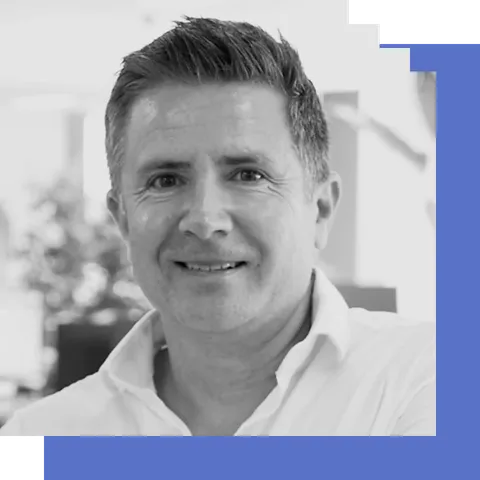
Michael Jeffriess
Co-founder & CEO, TaxGuru
-

Maureen Gabriel
Director, TaxGuru
-

Grant Abbott
Director, TaxGuru
These notes leave out the detail. For the full session, watch the replay. What speakers said is shared for information, not as professional advice.