The real reason your practice management feel slow (and the 1 percent fixes that change everything)
Paul Murray of AccountKit on marginal gains in a practice: small, regular fixes to how the firm uses the tools it already has, and a habit of continuous improvement that compounds.

29 November 2025 · 4 min read

Most accounting firms know they should be getting more out of their practice systems, but finding the time to step back and improve anything is tough. That is exactly why PowerUP was created.
PowerUP is a two day online event for accounting and bookkeeping firms that use Xero Practice Manager (XPM). It brings together firm owners, product leaders and advisors to share practical, real world ways to lift performance, remove bottlenecks and get more value from the tools firms already rely on every day.
Across the sessions, speakers unpacked everything from workflow improvements and reporting tips through to team structures, automation and practice change. The goal is simple: help firms work smarter without adding extra software, extra cost or extra admin.
If you missed the live event, you can catch all the replays here.
The opening keynote came from Paul Murray, founder of AccountKit and director at Murray Business Solutions. Paul shared how his own firm has been applying a simple but powerful method for practice improvement.
His core message was clear. You do not need a full transformation project. Consistent, marginal gains in how you work compound into real efficiency and create more room for better client relationships.
Facing the reality of change
Paul began by addressing something every firm owner recognises. The intention to change is often there, but the mental space to follow through rarely is. With a full day of client work, staff management, and personal responsibilities, many professionals end the day with nothing left to give to internal projects.
That is why he encourages a shift in mindset. Rather than waiting for a clear runway, start with what is possible now. Even a small improvement, applied consistently, can set positive change in motion.
Small changes that compound over time
A central theme in Paul’s keynote was the idea of marginal gains. He referenced a now-famous approach used by the British cycling team under coach Dave Brailsford, who looked to improve hundreds of small things by one percent.
While individually minor, the combined effect helped the team win the Tour de France earlier than expected and dominate the sport for years.
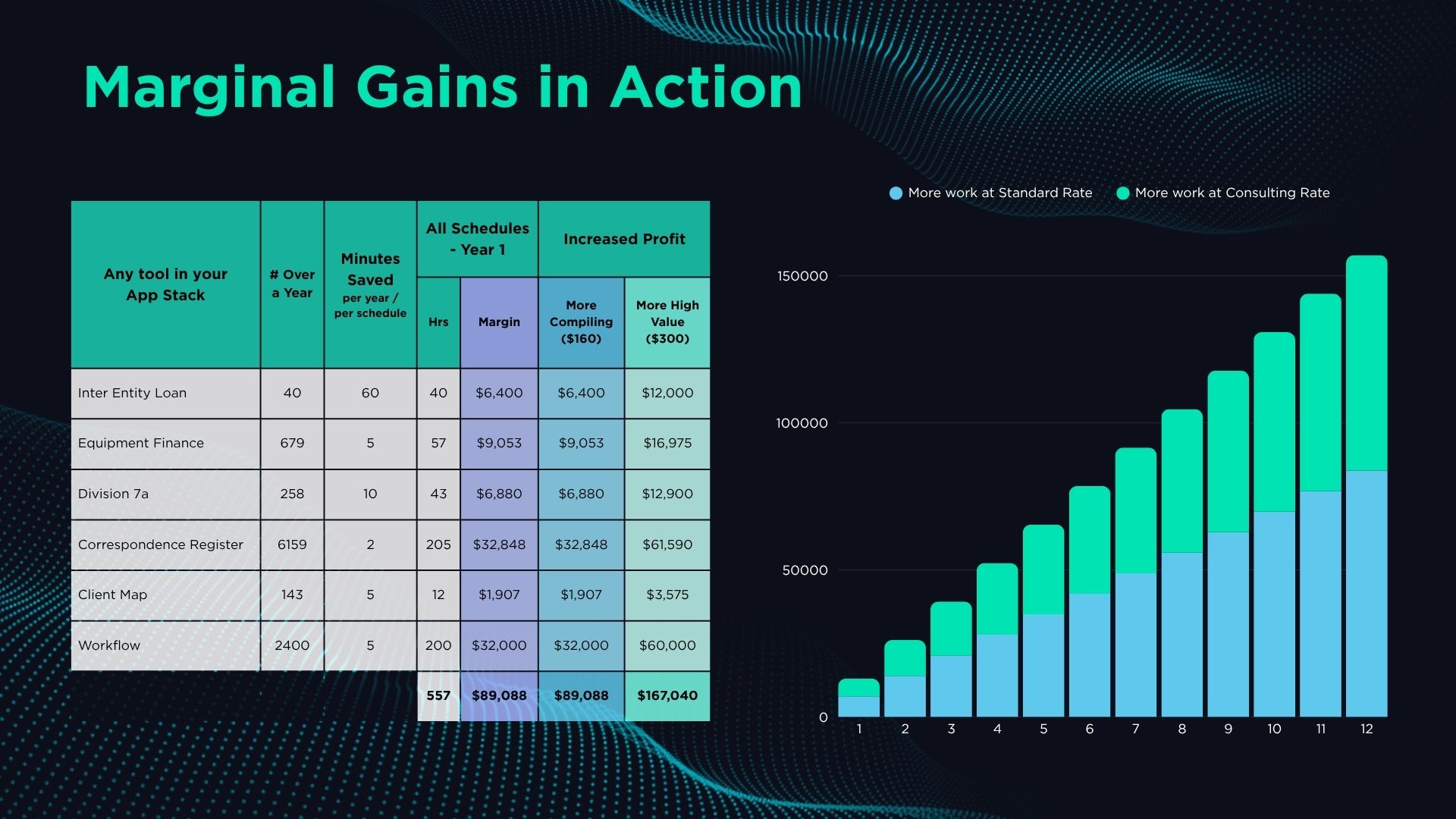
Paul believes this principle translates directly into accounting. Most firms perform repetitive work every day. Improving even one step in a routine task can save hours over the course of a year.
For example, reconciling entity loans used to take Paul’s team over an hour per month per entity. With the right tool in place, that same job now takes just a few minutes.
When improvements like this are repeated across workflows, the result is not only efficiency but space for more meaningful work.
Making better use of what you already have
Rather than constantly adopting new software, Paul encouraged firms to look more closely at how well their existing tools are being used. Most firms have adopted platforms years ago and never revisited how they are used, despite regular feature updates from vendors.
Paul recommended appointing champions across the team. These team members take responsibility for understanding a specific tool or system and report back monthly on any new capabilities, changes or better ways of using it. This allows the firm to maximise the return on existing investments and improve day-to-day performance without adding more complexity.
Creating a culture of continuous improvement
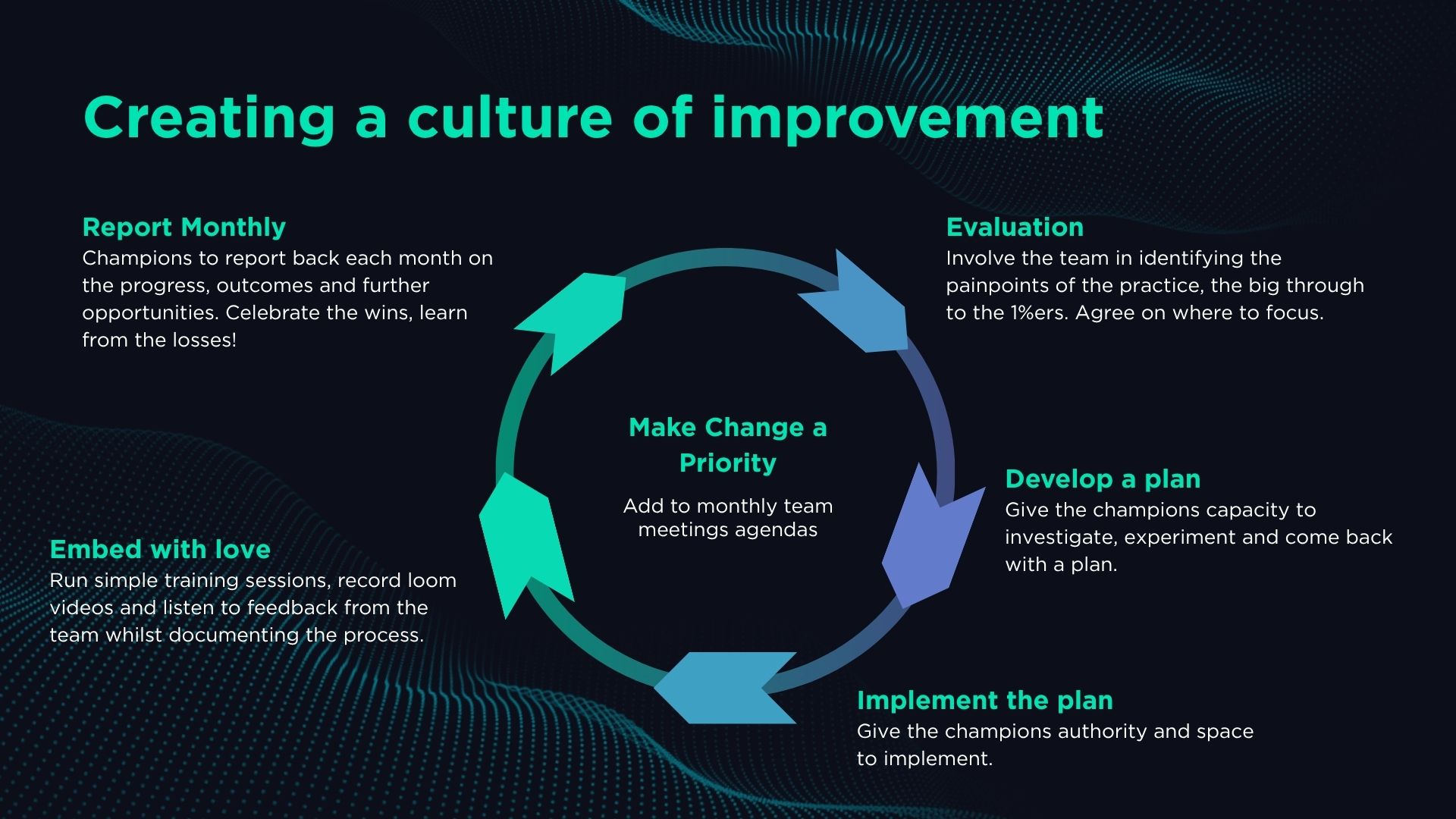
Paul presented a simple but structured approach to embed process improvement across the firm. It begins with a brainstorming session involving the entire team, from admin to directors. The goal is to list out not only pain points but also high-volume tasks that are often overlooked.
Common examples include setting up folder structures, downloading reports, preparing templates and managing files. These are the kind of 1 percent tasks that build up over time. Once identified, these tasks are prioritised and assigned to champions who are given clear authority and time within their budgets to work on them.
The team meets monthly to discuss what was trialled, what worked, and what could be tried next. Paul stressed that not every change will succeed, but failure is part of the learning process. What matters is keeping the cycle in motion.
From internal gains to external value
Throughout the session, Paul kept returning to a key point. Improvements in efficiency are not just about saving money or staff time. The end goal is to create capacity for better relationships with clients.
He described a recent visit to clients in Kununurra where the value of this approach was evident. Clients came into meetings with enthusiasm and left feeling energised. These relationships were built on trust, and trust takes time. Creating that time through operational improvements is what allows firms to deliver more value and build deeper connections.
One thing to take away
Paul closed with a simple challenge. Do not try to fix everything at once. Choose one thing to change. Write it down. Make it happen. Then repeat.
Small improvements might not feel significant in isolation, but they form the foundation of a more efficient, focused and resilient firm. They also create the space for better client conversations, fewer errors and a team that feels more engaged and capable.
What matters is starting. Everything else builds from there.
Sponsored

Practice Management


